
When Humanity goes Ape
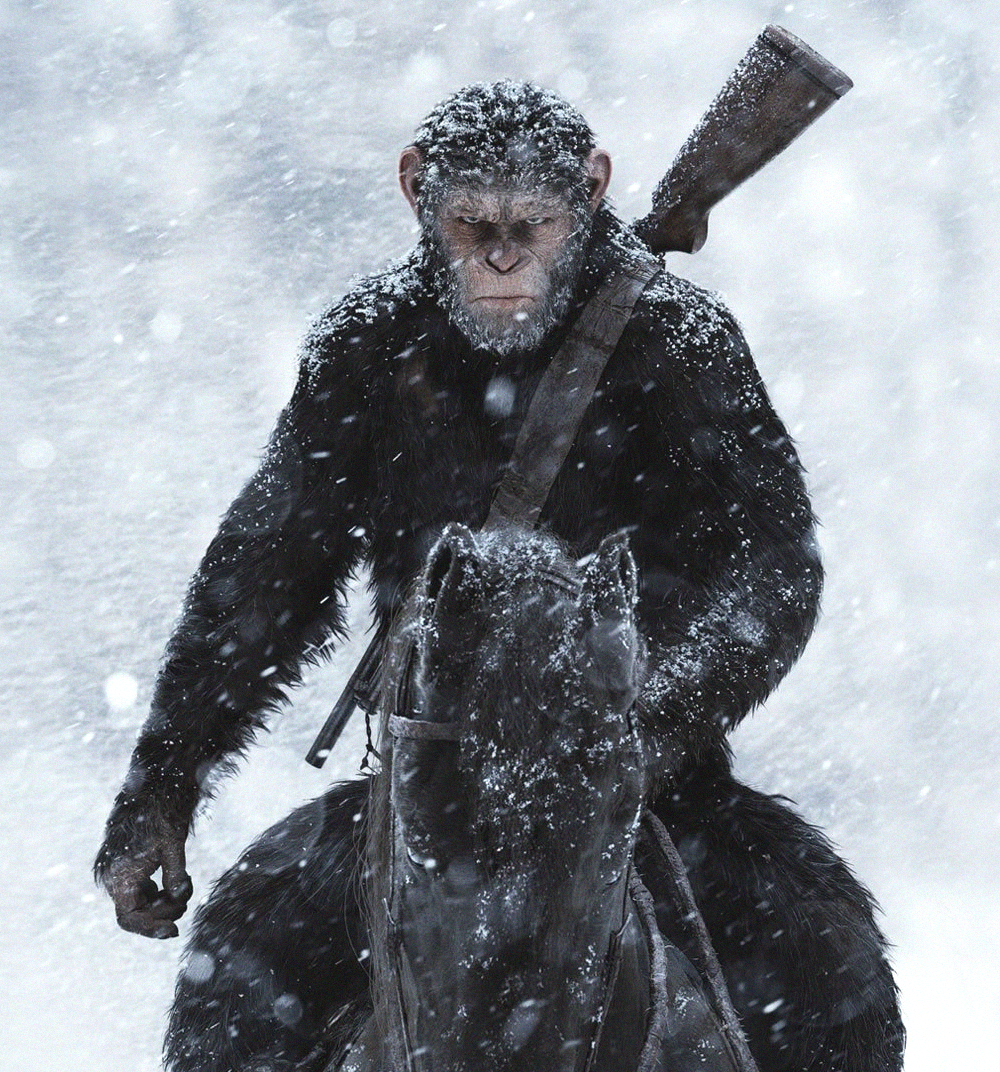
Has humanity's view of itself changed much in the last 50 years?
Do we see ourselves more positively or negatively?
Do we believe humanity has evolved in our ability to live together and rule the planet?
These are questions I have pondered from watching the Planet of the Apes films. They present a very dystopian view of humanity. When the series first started, humans were being savagely oppressed by apes. The recent versions have the tables turned, with the humans now seen as the villains.
Does this reversion of the portrayal of mankind reflect a loss of belief in ourselves? Would the deserved destruction of the human race, as shown in the 2017, War for the Planet of the Apes, have been acceptable when the film series first started in 1968?
While the sequels to the 1968 film do show a similar reversal, it is not as black and white as the humans deserved to be subdued by the apes. Also, these sequels are not really well known now, so I believe it is right to focus the comparison on the 1968 film only.
The Begining
In 1968, Taylor (Charlton Heston) crash-landed in his spaceship on a strange planet ruled by apes. Some mute humans were hunted and used as forced labour. Taylor is befriended by some compassionate apes who try to argue for him to be treated with respect. When this fails, Taylor escapes only to realise (spoiler alert), he was on Earth all along.
In the original Planet of the Apes, Taylor is a hero. He tries through word and action to save his friend, who survived the crash with him. He also tries to save the other native humans. He is abused physically and mentally by the apes. He bravely fights them with human arguments to be allowed to live freely. He eventually takes on a physical fight to save himself and the native woman he has come to love.
There is no doubt that Taylor is an example of the greatness of the human spirit.
In this original trailer, you are left with no doubt that ape is bad and that human is good.
https://www.youtube.com/watch?v=08OpupJW4ao
The ending for now
From 2011 to 2017, three more ape films were made. They centred around an ape called Ceaser. As part of a medical experiment, Ceaser's mother was given medication that enhanced her cognitive abilities.
Ceaser was cared for by a human family while his intelligence improved at a phenomenal rate. Despite this intelligence, he was still an ape. This caused problems, and eventually he was taken captive.
Meanwhile, the same medication that improves Ceaser and the other apes causes many humans to die. Those who don't die become sick, losing speech and higher thinking abilities.
Ceaser's relationships with humans eventually turned sour as his trust in them was destroyed. This decline is a central theme of the series.
In the reverse of the first film, it is now the humans who are portrayed as evil, manipulative, fearful and mad. It is the humans who seek to destroy the intelligent apes and, in the process, destroy themselves. To survive, some humans believe they must destroy their own innate humanity.
Ceaser is presented as a loving, protective leader of all those he cares for, even initially some humans. Ceaser's fall into vengeance against the man who killed his wife and child is presented as tragic but not wrong. Ceaser, the leader of The Planet of the Apes, is our 21st-century hero.
This trailer for the last film gives a glimpse of why the apes had to fight the humans.
https://www.youtube.com/watch?v=UEP1Mk6Un98&t=61s
Humanity falls; Apes rise
It is my belief that the premise of the first film was how humanity would prevail against the evil race of apes. The new films now want us to cheer on the apes as we see the brutality of man.
Both films were very successful and have a strong fan base. How is it possible that in just under 50 years, the general public was perfectly ok with such a reversal in the presentation of humanity?
What changes have happened in our culture since 1968 to make all humanity the perfect villain?
I do not have the answer. I would be interested to know if you did?
Are we more cynical about ourselves? Have we seen more evil in humanity since 1968 than kindness and heroism? Are we more aware of an innate sinful nature that we were once blind to? Do we simply dislike ourselves more as we isolate more from each other behind our devices?
If we have become comfortable with being portrayed as evil, what does that say about us? Are we as caring to ourselves and to others as we were when Charlton Heston was our hero? Do we treat ourselves and others with disdain, believing we are the greatest threat to our own survival?
I present my belief that the new story would never have been made 50 years ago. A film presenting all humanity as evil would have been a box office flop in 1968, as we wanted to be the heroes then.
If you disagree with my interpretation of Planet of the Apes, please do say so in the comments below. Differing opinions on films have existed since cinema began over 100 years ago.
Twisted mercy
Below is the scene from the last film which I think best shows the conflict that causes the decline of humanity within man.
The Colonel leads a small group of rebel soldiers who hunt apes, kill their own men when they become sick with the ape infection and attack other humans who stand against them.
The Colonel describes how he killed his own son when his son became infected. He said it purified him as he became more assured of his purpose that some people would have to be destroyed for humanity in general to be saved. He even has a cross on his shelf to indicate a kind of religious approval of his behaviour.
The Colonel challenges Ceaser in this scene to understand what real mercy is. To him, it is true mercy to kill the infected people. He asks Caesar whether he would have sacrificed his own son so as to save his people.
Later, the Colonel challenges Ceaser, is it more important for Ceaser to avenge the slaughter of his family by killing him or to lead his apes to freedom? Caesar could not have it both ways. The Colonel indicates that if Ceaser killed him, he and his fellow apes would be destroyed by his soldiers.
The decline of the character of the apes is also shown in the series as they begin to behave out of fear and revenge, like the humans.
https://www.youtube.com/watch?v=Itm3obagfLI&t=73s
A human hero shows kindness
There is one human hero in the last film. Caeser has, in the previous two films has found that the good humans always seem to lose. In the last film, there is one who saves him when he is near death. This person even ends the film to seemingly live happily ever after with the apes in their new homeland.
The beauty is that the last heroic person standing is a very young girl who is infected. In many ways, she is the type of person the Colonel wishes to wipe out. The irony is that he takes his own life when he becomes infected, as she is. She felt free to accept herself where whereas he didn't. The result: he died, and she lived.
So there is some hope for humanity even in this very dystopian view.
Learn More About Counselling at Prevail
James Foley is an accredited counselling therapist with The Irish Association of Counsellors and Psychotherapists.
He has worked in counselling since 2015, and full-time since 2021.

He worked as a psychiatric nurse from 1998 to 2021, in various capacities. This included 12 years in an HSE residential detox centre.
He has a BSc in Nursing, a Diploma in Counselling and Psychotherapy and various courses at Masters' level. His Masters' level training includes Cognitive Behavioural Therapy.
Contacting James for further support
If you would like more information about how my work with Prevail could help you, please visit the website at www.prevailcounsellingtherapy.ie .
To discuss how I can help you more thoroughly, you can arrange an appointment for over the phone, by video or in person by clicking here: Initial Appointment .
PHONE
085 857 1193
james@pct.ie
ADDRESS
123 St. John's Wood West
Commons, Clondalkin
D22 RC93
Prevail Counselling Therapy
© 2025 All Rights Reserved