
Christian Counsellors: Can you trust them?
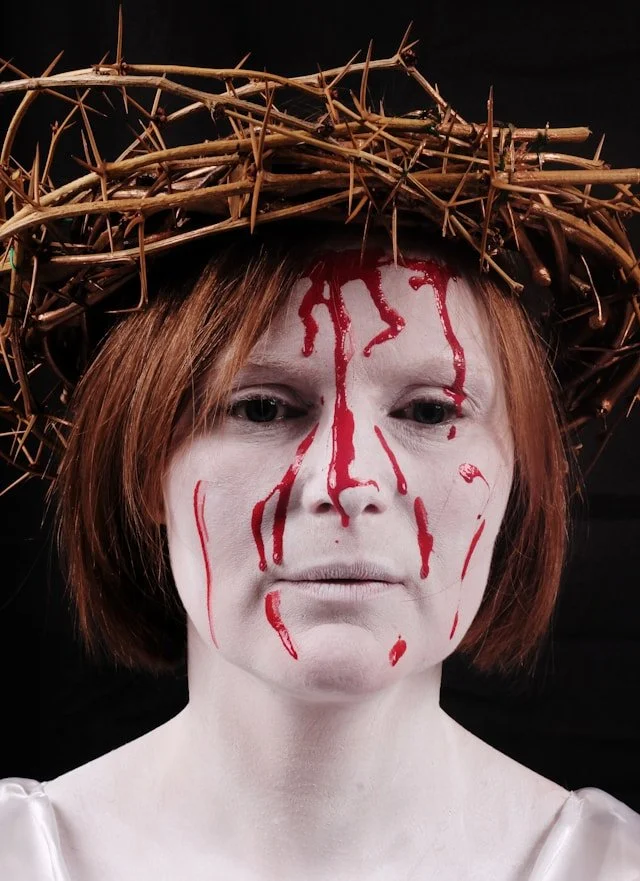
By Marek Studzinski on Unsplash
I believe yes.
Christian counsellors can be trusted to work with secular clients.
The reason this seems a controversial statement is because of the cultural associations our pluralistic society has towards Christianity.
As we all know in our current climate, there is a view that Christians are generally very conservative. They are perceived in social media discourse as being unable to adjust to current social norms.
The culture implies that Christians are inflexible, making them unsuitable for working therapeutically with people outside their religious worldview.
My aim in this blog is, as a practising Christian myself, to reassure secular people that Christians are capable of providing them with counselling support.
The objections to Christians as Therapists
These are the main objections, as I see it:
The perceived history of the influence of the Roman Catholic Church on social issues in Ireland.
The emergence of culture wars on social issues.
Specific teachings of the churches and the Biblical references on which they are based.
Irish Social History
For the first 60 to 70 years of the Irish state, one organisation has dominated the culture: The Roman Catholic Church.
In the last 30-plus years, one word has been used continuously to describe the relationship between the Irish people and the Catholic Church: Abuse.
It is no coincidence that the referendum votes in recent years have frequently been seen as a statement on our relationship to the Catholic Church.
A lot of legislation passed in the last 30 years was viewed as Ireland maturing and moving away from the image of Catholic Ireland.
This report outlines how the Irish media reflects the current perception of Catholicism in Ireland.
The emergence of the culture wars
Some conservative groups amd individuals, perceived as acting from a Christian ethos, have become more vocal in their opposition to the changes in society they disagree with. This has resulted in clashes with outspoken progressive representatives.
While the message of these culture wars may be civil and appropriate, they often become aggressive and resort to name-calling in how they communicate their views across the battle lines.
Some clients may perceive that a Christian counsellor could be part of the more aggressive side of the conservative voice on social issues.
I am glad to say I am unaware of any Christian therapist who could be called intolerant in how they practice their conservative beliefs.
Biblical and Church teachings are archaic and unreliable
It is generally considered that the Bible is unreliable.
Modern discourse claims the Bible is responsible for the undermining of women over the centuries.
This article outlines that point from a feminist viewpoint.
In the 19th century, some Christians believed the Bible supported slavery.
In the eyes of a secular society, the Bible and the churches based on it are perceived, at best, as out of date and, at worst, dangerous.
It is beyond the scope of this blog to reply to those beliefs.
Let me assure you that Christians constantly struggle with the social context in which the Bible was written and how it can be applied in our time.
It was definitely not written to our time in history, but there is truth there that Christians believe applies to all cultures throughout all the ages.
Stereotypes of what people may expect from a Therapist who is a Christian
A secular client may perceive that a Christian counsellor would try to convert them.
Perhaps they may expect a “Ye must be born again” sermon, followed by an invitation to their church.
Or perhaps to be sprinkled with holy water at the end of each session and be encouraged to go to confession.
Judgementalisim
A secular client may expect a Christian to have a strict moral code, based on beliefs they would not accept.
The stereotype is that Christian counsellors cannot accept perceived immoral behaviour from clients. They would regard it as a sin and require the client to repent of it as a means of becoming a godly person.
The client may believe the therapist is only interested in preventing the client from engaging in perceived immoral behaviour.
The actual distress the client is in may go unnoticed from their point of view. This frustration will likely rupture the relationship between them.
The client will feel uncared for and not trust the counsellor.
Evangelisim
A client who rejects Christian teaching may fear the evangelistic approaches of a Christian counsellor.
The stereotype here is that the Christian counsellor views counselling work as an opportunity to spread “the good news of Jesus”, and convert the client to believe it.
A client may want to explore their spiritual beliefs.
Clients who want to explore their existential questions may not engage with a Christian counsellor.
They may expect that such counsellors would direct them to only explore in a Christian direction, or even presume a Christian counsellor would push a Christian worldview on them.
Can a Secular Client ever expect therapeutic care from a Therapist who is a Christian?
Yes.
Below, I outline key reasons I believe a secular client can feel comfortable with a therapist who is Christian.
Professional Accreditation
All accredited therapists agree to follow codes of practice from their professional registration body.
The Irish Association of Counsellors and Psychotherapists, which is the biggest related association in Ireland, in the first principle of their Code of Ethics and Practice, states:
“Respect for the rights and dignity of the client.
Practitioners are required to treat their clients as persons of intrinsic worth with a right to determine their own priorities, to respect clients' dignity and to give due regard to their moral and cultural values.
Practitioners take care not to intrude inappropriately on clients' privacy. They treat as confidential all information obtained in the course of their work.
As far as possible, they ensure that clients understand and consent to whatever professional action they propose.”
To read this code, click HERE.
The Irish Association of Humanistic and Integrative Psychotherapists states that the purpose of their code is to protect clients from harm.
To read this code, click HERE.
It is very important that all clients only work with accredited counsellors.
If they don’t, their counsellor is not publicly held accountable for their practice.
A client can report a counsellor to their professional body.
A counsellor can lose their accreditation if a serious complaint is upheld against them.
That would likely be the end of their career.
Professional Training to Degree standard, at least
All professional training supports respect for clients' individual beliefs and moral/spiritual practices.
My experience was that professional training was strongly secular-focused.
It was acknowledged that a client may have spiritual or even specific religious issues, but there was no mention of how to work with a client’s religious issues for their benefit.
To receive the professional training required for a therapist to be accredited, they will have participated in highly secular training.
The Person Centred Institute, where I trained, introduces its course with the following phrase,
“PCI College’s unique training programme is centred around an integrative model which is inspired by an underlying humanistic philosophy.”
To read about their course, click here.
Commercial Realities
Unless a counsellor is working in a setting where the client would expect them to present a Christian perspective, clients will not want to work with a pushy Christian.
Counsellors in private practice are dependent on word of mouth. If that word is that they are an overbearing preacher in the therapy room, they will get no referrals. Private practice can not survive without referrals.
If the counsellor is employed by an NGO or charity, they will simply lose their job if they are believed to be promoting their religion.
The simple commercial reality is that there is no money in being a preachy therapist or only accepting clients who fit with your moral views.
Are there Positives in Working with a Counsellor who has a Christian Faith?
A counsellor with a Christian faith can not engage their faith directly in a counselling room unless there is an agreed understanding of how this is to be done.
Therefore, a pagan, a muslim, or a complete atheist should have no problem working with a Christian therapist.
Even if a therapist who is a Christian never refers to this in the session, is there still a difference in working with them? Could that difference be positive?
Psychology Today statesthat Christian counselling can be as effective as secular counselling.
Research from the early 2020’s has shown that Christian maturity is a good indicator of emotional and cognitive maturity. If the counsellor is a mature Christian, it is a positive indicator that their maturity will reflect in their work.
The client is dependent on their therapist to be emotionally stable. I believe that Christian therapists would be expected to be emotionally stable.
The Christian moral tradition that many secular people find objectionable has been and continues to be a consistent source of strength for society.
This piece from Bible Life Magazine outlines Biblical passages on serving others, seeking justice, and the inherent value and dignity of every human being.
They are cornerstones of both Christian and secular morality.
The Christian’s process of growing in faith and knowledge of God is a process of increasing their knowledge of themselves.
Psalm 139 is a psalm outlining how well God knows us and how we may struggle with being known so intimately. It ends with:
“Search me, God, and know my heart;
test me and know my anxious thoughts.
See if there is any offensive way in me,
and lead me in the way everlasting.”
A mature Christian has been searched and known by God. They are tested and every anxiety known.
Their offensive ways to God will be made clear. This rigorous self-examination will lead them to everlasting presence with God.
There is nothing to fear for a secular client in working with a Christian who is walking with God in this way. I aspire to be that Christian.
How I Work as a Christian in a Secular Counselling World
Personal disclaimer
First, let me state that yes, I am a conservative Christian when it comes to the hot topic issues of social discourse.
I have come to my position on issues after a lot of analysis and consideration of the arguments.
I am not going to present that here, as it will take too long and it’s beyond what this blog is for.
That said, I would say that 99% of my client work to date has been in a secular context.
I have not received any complaints from clients that I have overstepped the mark in bringing my faith into the counselling room.
The client is in charge
If a client brings up a moral issue that I may disagree with, I only bring it up with the client on the basis of how much of a problem it is to them.
To put it simply, if it’s not a problem for the client, it’s not a problem for me.
If a client is discussing an issue where there is a Christian perspective, I will present it.
This is because the client deserves to have a fully informed choice in their decision.
Naturally, I have to be careful not to give added weight to the Christian choice in any process the client makes.
When and how would I refer to Christian views in the session?
It has happened, rare but it has happened, that a secular client would ask me direct questions about my faith.
This is usually in the context of already expressed interest in exploring a spiritual solution to their presenting issues.
I will answer any direct question a client asks and even discuss it further if that is what the client wants. That is as far as I would go, because I am not theologically trained.
Spiritual exploration, I believe, is best done within the client’s own life.
If they have a pre-existing church context, I would encourage them to go to their church leader and seek counsel on spiritual issues there.
If they don’t have a church, I may outline options to them that I think would be appropriate.
This would be based on my own knowledge of local churches and observation of the client’s culture and personality.
How faith in Christ permeates my counselling work
I would hope that my work is reflective of Christian compassion as expressed in Psalm 145:8-9:
“The Lord is gracious and compassionate,
slow to anger and rich in love.
The Lord is good to all;
He has compassion on all he has made.”
I have some way to go before I reach this level of maturity; There but for the grace of God, go I.
Overall, I believe the primary reflection of my Christian faith in my work is the belief that all client problems have a solution.
My faith helps me believe a client can learn to live with unchangeable pain, such as grief, or overcome the prison of negative thoughts, such as with addiction.
I believe in a God who is the source of hope for all human affliction.
I don’t generally express this in the sessions, but I do hold onto it as my determination to find a way to help a client in any way I can.
Other Related Christian Counselling Material
The process of choosing and using therapy for Christians
This blog aims to introduce therapy as an extension of the care a church member is already receiving from their Church.
What role does the Church have in supporting a Christian attending counselling?
Should a Christian always do counselling with a Christian therapist?
How would a Christian utilise their faith in counselling sessions and during their life, generally during a season of counselling?
Are there crossovers between faith and counselling theory?
How does Prevail incorporate faith in therapy work?
Click herefor a blog on this.
Christians choosing therapy
Many Christians don’t consider professional counselling as an option for helping them with emotional pain.
They may feel their Church provides them with the support they need.
Some Christians may believe a counsellor will disregard their faith. Fear of a self-oriented healing message might make Church attenders automatically say no to therapy.
This blog defends therapy as a positive addition to the care Christians receive from their Church.
Clickherefor a blog on this.
Learn More About Counselling at Prevail
James Foley is an accredited counselling therapist with The Irish Association of Counsellors and Psychotherapists.
He has worked in counselling since 2015, and full-time since 2021.

He worked as a psychiatric nurse from 1998 to 2021, in various capacities. This included 12 years in an HSE residential detox centre.
He has a BSc in Nursing, a Diploma in Counselling and Psychotherapy and various courses at Masters' level. His Masters' level training includes Cognitive Behavioural Therapy.
Contacting James for further support
If you would like more information about how my work with Prevail could help you, please visit the website at www.prevailcounsellingtherapy.ie .
To discuss how I can help you more thoroughly, you can arrange an appointment for over the phone, by video or in person by clicking here: Initial Appointment .
PHONE
085 857 1193
james@pct.ie
ADDRESS
123 St. John's Wood West
Commons, Clondalkin
D22 RC93
Prevail Counselling Therapy
© 2025 All Rights Reserved